

The Importance of Microchipping your pet
At Markham Woods Animal Hospital, one of the most important safety recommendations we make for every pet — whether they are indoor-only or love the outdoors — is microchipping. It’s a simple, quick procedure that can make the difference between a lost pet staying lost and a happy reunion with their family.
Many pet owners have heard of microchips, but not everyone fully understands how they work or why they are so important. Microchipping is a safe and reliable way to permanently identify your pet and greatly increase the chances that they will be returned to you if they ever get lost.
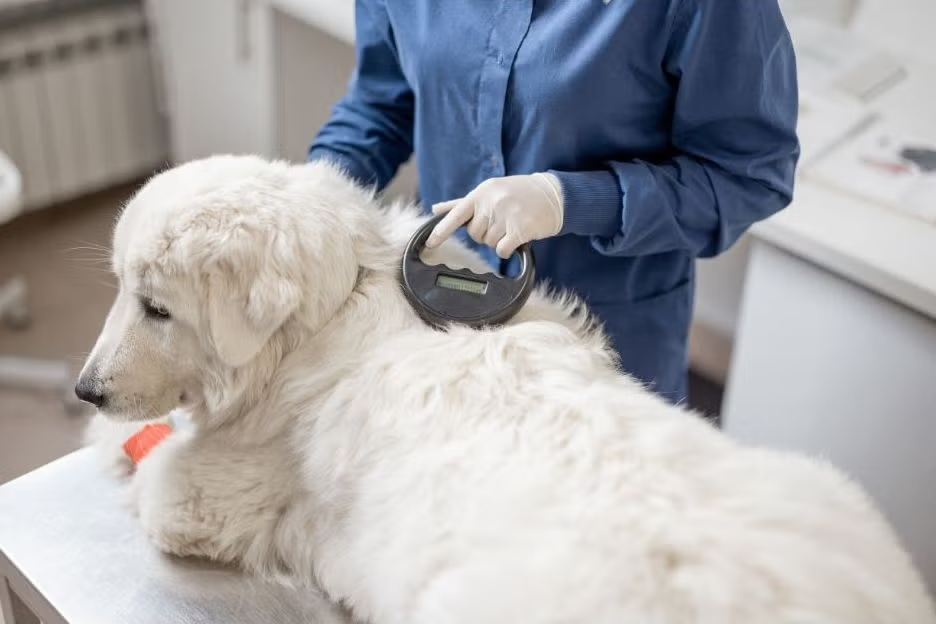
A microchip is a tiny device, about the size of a grain of rice, that is placed just under the skin between your pet’s shoulder blades. Each microchip contains a unique identification number that can be read with a special scanner. This number is linked to your contact information in a secure registry. If your pet is ever found and brought to a veterinary hospital, animal shelter, or animal control facility, they can scan for a chip, retrieve the ID number, and contact you right away.
One of the most common concerns owners have is whether microchipping is painful. Fortunately, the procedure is very quick and similar to giving a vaccine. The chip is inserted with a small needle, and most pets tolerate it very well with little to no discomfort. It can be done during a routine visit, at the time of vaccines, or while your pet is under anesthesia for a spay or neuter procedure.
Microchips are designed to last for your pet’s entire lifetime. They do not require batteries, they do not need to be replaced, and they do not wear out over time. Once the chip is placed, it usually stays in position permanently. It is very rare for a microchip to move or come out.
It is important to understand that the microchip itself does not store your personal information. The chip only holds an identification number. Your name, phone number, and address are stored securely in the microchip registry. This is why keeping your contact information up to date is so important. If your phone number or address changes and the registry is not updated, it can make it difficult to reunite you with your pet.
Many people assume that indoor pets do not need microchips, but we strongly recommend microchipping for every pet. Even indoor-only pets can escape through an open door, a broken screen, or during a stressful situation like a storm or move. Collars and tags are helpful, but they can fall off. A microchip is permanent and cannot be lost.
Another common misconception is that microchips can track your pet’s location. Microchips do not have GPS and cannot track where your pet is. Instead, they act as permanent identification that can be read when your pet is scanned at a veterinary hospital or shelter.
Microchipping is safe for pets of all ages, including puppies and kittens. Many pets are microchipped at the time of their first vaccines or during their spay or neuter surgery, but the procedure can be done at almost any time.
If you are not sure whether your pet already has a microchip, we can easily check. Any veterinary hospital or shelter can scan your pet, and the process only takes a few seconds. If a chip is found, we can help you confirm that the registration information is correct.
Over the years, we have seen many situations where a microchip made the difference between heartbreak and a happy reunion. Pets without identification often cannot be traced back to their owners, but pets with microchips have a much higher chance of finding their way home.
At Markham Woods Animal Hospital, we believe microchipping is one of the simplest and most important steps you can take to protect your pet. If you have questions about microchipping or would like to schedule an appointment, please give us a call at 407-682-3233. We are always happy to help keep your furry family members safe.