

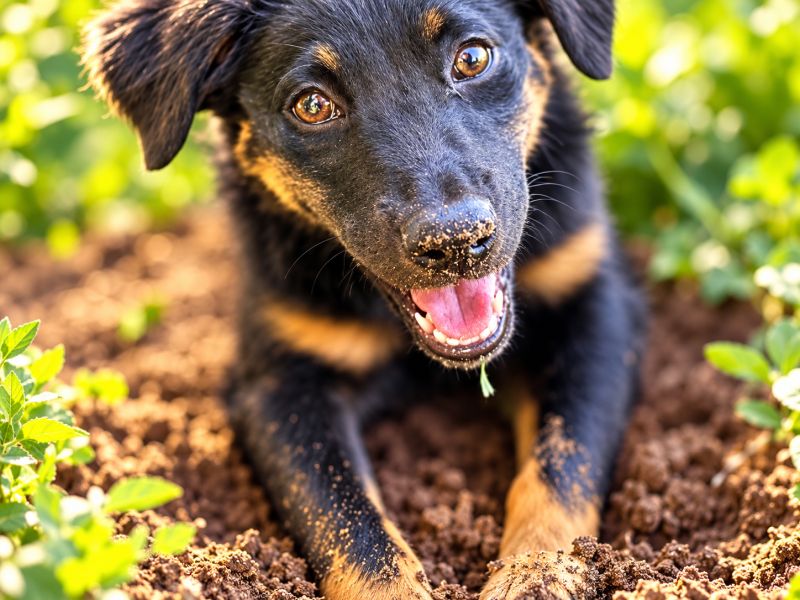
Help! How Do I Stop My Puppy From Digging?
First, know that digging is completely normal dog behavior. Puppies may dig because they are bored, curious, excited, looking for something interesting, trying to cool down, following an enticing smell, or simply because digging is fun.
The goal is usually not to punish the behavior, but to determine why your puppy is digging and provide a better alternative.
Increase Exercise and Enrichment
A puppy who spends time outside without much to do may invent their own entertainment. Unfortunately, landscaping is sometimes their chosen hobby.
Provide appropriate exercise for your puppy's age and breed, along with sniff walks, toys, training sessions, food puzzles, and interactive play.
A mentally satisfied puppy is often much less interested in remodeling your backyard.
Supervise Backyard Time
During the training period, avoid giving your puppy unlimited unsupervised access to areas where they like to dig.
Go outside together.
If your puppy begins digging somewhere they shouldn't, calmly interrupt and redirect them to another activity. Ask for a simple behavior such as "come" or "sit," then reward them and engage them with a toy or another activity.
The more frequently a puppy practices digging in a particular spot, the stronger that habit can become.
Create an Approved Digging Area
For puppies who really love to dig, consider giving them a place where digging is allowed.
A sandbox or designated patch of loose soil can work wonderfully. Bury toys or treats just beneath the surface and encourage your puppy to find them.
Now you are not fighting a natural instinct. You are teaching your puppy:
Dig here, not there.
Reward them enthusiastically when they use their designated digging spot.
Make Favorite Digging Areas Less Appealing
If your puppy repeatedly returns to one flower bed or section of the yard, temporarily block access with puppy-safe fencing or another physical barrier while you work on training.
Avoid frightening or painful deterrents. Puppies learn best when we prevent unwanted behavior and heavily reward the behavior we want instead.
Consider What Is Under the Ground
Sometimes there is a reason your puppy is fascinated with one particular location.
Dogs have incredible noses. Insects, roots, rodents, fertilizer, or other interesting smells beneath the soil may encourage persistent digging. If your puppy suddenly becomes obsessed with one area, take a closer look.
Also be cautious about what your puppy may uncover or eat. Fertilizers, pesticides, certain plants, mushrooms, mulch, and other backyard materials can potentially be harmful.
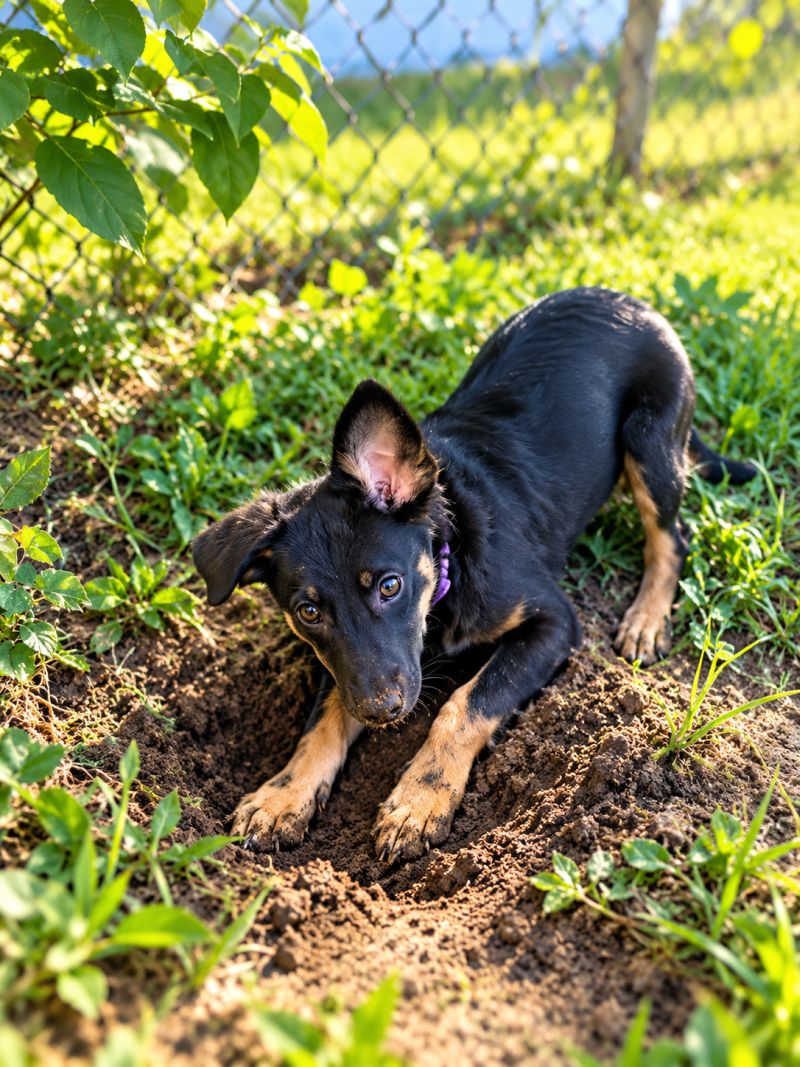
Training Takes Time
Your puppy is not trying to be naughty. They are learning how to live in a human world, and we have some pretty strange rules from a dog's perspective!
Keep training sessions short and positive. Reward the behaviors you want to see repeated. Prevent your puppy from repeatedly practicing behaviors you don't want, and remember that consistency among everyone in the household makes training much easier.
If digging, chewing, barking, destructive behavior, fear, or separation-related behaviors become excessive, talk with your veterinarian.
Sometimes behavior that looks like simple mischief can be related to anxiety or another underlying concern.
Most importantly, enjoy this stage. The puppy months can feel exhausting while you're living through them, but they go by incredibly quickly.
Take the pictures. Celebrate the little victories. Laugh at some of the chaos.
Before long, that tiny puppy digging holes in your backyard will be the grown-up dog curled up next to you on the couch.
More puppy questions? Give us a call we are happy to help! (407) 682-3233, or you can email us at [email protected]. Don't forget to follow us on social media Facebook, Instagram.